Morning Song

I owe the Lord a morning song
Of gratitude and praise,
For the kind mercy He has shown
In lengthening out my days.

This song was “there” as soon as I awoke this morning.

I would only change the last line–

because David’s last line is my song, too, no matter if my days are lengthened or shortened:

Surely goodness and mercy will follow me all the days of my life and I will dwell in the house of the Lord forever.

I owe the Lord a morning song of gratitude and praise.

Amen.

Bike Path Reflections on Forks in the Road

A guest post today from Vicki VanNatta.

Vicki, two friends, and I recently spent a morning on bicycles in Acadia National Park on Mount Desert Island in Maine. You’ve heard of the “mountains of Acadia”? That phrase is always used to describe the island’s striking topography — except in bike rental shops. There the word mountain is absent from everyone’s vocabulary.

The morning bike ride triggered reflections on our lives. Vicki tells it well …

.

Biking Acadia

Have you ever biked in Acadia National Park? Bike rental companies will tell you the hills are ‘rolling’ and ‘manageable’ and assure you that people like me—a seasoned senior who rarely rides a bicycle—can enjoy riding the many miles of carriage roads throughout the park. 

They don’t mention the long stretches where the road steadily inclines—stretches where this senior was pushing her bike for at least half a mile at a time. They’ll also tell you the carriage roads are clearly marked with directional signs and you won’t lose your way.

May I just say here that either I am much more out of shape than they thought and far more directionally challenged or their point of reference is vastly different than mine.

The hills are not steep but they are long. The signs are there, but I felt like Dorothy on the yellow brick road. There should have been a sign at the very first fork after the very first hill, a sign that said “If you haven’t ridden a bike for years, turn back now!”

But the morning was beautiful, the company was wonderful, and I thought ten miles on ‘rolling hills’ was doable. 

By the time we took a break, ate our snacks, and debated if we were going to finish the course or turn back the way we had come, I was very tired and wishing we were done instead of at mid-point. I wasn’t having fun anymore. But going forward or backtracking —  either option meant a lot of pedaling and more pushing.    

Wearily, we got back on the path and turned down what we thought was the correct road. I was delighted to discover that we had an immediate, exhilarating, long decline. I rushed down the hill enjoying every second. It was a welcome relief to the long uphills we had just climbed.

Sadly, after a minute of effortless downhill delight, we arrived at another fork, and here the signs made it plain we had gone the wrong way!

The ride down the hill had been wonderful and exciting, a welcome relief from the hard uphill work. But now, we had no option except turning around and going back up the path we had just come down. For me, it meant a long walk pushing my bike back to that first fork and then starting over in the opposite direction. The forest didn’t seem so beautiful anymore. The mosquitoes were really annoying. I was hot and tired and hungry. And my legs ached. The joy of the downhill cruise was forgotten and it certainly wasn’t worth it once we realized our mistake.

As I pushed my bike back to the place where we had turned right when we should have gone left, I thought to myself how much that thrilling ride down the wrong road reminded me of poor choices in my life. 

Thirty years ago, I stood at a fork in the road. I was struggling. The trip to that point had been very difficult. I looked at the signs, hoping for an easier road ahead.

 As a young girl who was in church since birth, I had studied the map; but somehow, at that time of decision, going down a road that was not on the map seemed so right. And away I went, flying along without effort, enjoying the ride and thinking how much better this road was than the path I had been on.

Only to discover I had gone the wrong way. This was NOT the road I needed to be on.  And oh, how hard it was to get back up that hill and start over in the opposite direction!

Pushing my bike back up the hill in Acadia took only minutes. Putting my life back together after an affair and bitter divorce took many years and far more tears.

Just as turning the wrong way on a bicycle path took all four of us down the wrong road, my choice thirty years ago took many others with me. My daughter, my husband, my family, the family of the man I was involved with—I took them all down that road with me. And when I was forced to face my mistake, we ALL had to work our way back up a long hill—trying to go in a new direction, trying to find strength to finish the trip.

When we finished our Acadia bike trip, I was hot, tired, stiff, and thinking that the morning after I would not be able to stand up straight. Surprisingly, the next morning I woke up and realized that I would do it again. In fact, I want to do it again! But next time I hope to be a frequent rider, stronger and more experienced.  I will be very careful not to take that wrong fork in the road. I will pay more attention, study the map more closely, ask if I need help in determining which direction to go, and learn from my past choices.  And so it is with my life.

If you find yourself at the bottom of the hill, tired, weary, and utterly without hope, turn around. Don’t just keep going, hoping things will somehow get better. Find someone to walk back up the hill with you. And most of all, ask God for the strength to get back to that place where you can, once again, be on the right road. The road home.
Tree Prayer

O Lord God, you are the God of hope, the One who lights my darkness, the One who has done wonderful things for me, the One who can do what we humans think impossible.

Savior Redeemer, You took on humanity to save me from the enemy who would destroy me. I look to You for protection. By Your Spirit, train my hands for battle, strengthen me, and give me your shield of victory. Do not let my enemies devour me.

This pilgrimage leads through desolate wilderness. You are the One who brings forth streams of everlasting water in the desert and makes rivers flow across parched ground. Create a new heart and renew a right spirit within me. Give life to dry bones.

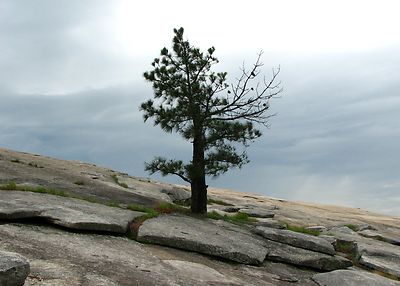
You promise that those who trust in You will be like trees by the river, with roots going deep into the water of life, not bothered by heat, unafraid of long drought. Plant me by the water and make me unafraid, Lord,

so that I may reflect Your glory, as You make me more and more like You and change me into Your glorious image.

Amen.

*

Scripture: Romans 15:13; Luke 1:37; Psalm 18; Isaiah 41:18-20; Psalm 51:10; Jeremiah 17:7-8; 2 Corinthians 3:18

Through the Curtain

King David voiced the yearning: “Let me live all my days in your sanctuary.” Our own hearts respond. Let us live, Lord, as close to you as we can get!

I’ve written before that one of my favorite stories in the Bible is only one verse in length, the simple statement that says at the moment of Christ’s death the veil setting apart the Holy of Holies in the temple and denying entrance to everyone except the high priest was ripped in two.

Christ’s death ripped apart the barrier between us and God. His body and blood, sacrificed for us, gave us the right to enter into God’s most holy presence—washed clean, spotless. The way is opened for us!

So God has given both his promise and his oath. These two things are unchangeable because it is impossible for God to lie. Therefore, we who have fled to him for refuge can have great confidence as we hold to the hope that lies before us. This hope is a strong and trustworthy anchor for our souls. It leads us through the curtain into God’s inner sanctuary. (Hebrews 6:18-19)

I feel the same yearning David wrote into his songs. I seek God, I thirst for God. And here we find that hope leads us to know Him more intimately than ever before. Hope that knows, hope that trusts, hope that is confident, hope that believes what God says—this hope brings us into the presence of the Father, ever closer to the One we long for and seek to know.

Hope — trusting what God says. His promises tell us who He is. Through His promises He tells us of His love for us and His plans for us. How can there be an intimate relationship with anyone if there is no trust in what they say or no faith in who they are? Our trust in our Father, our belief, our hope leads us deeper into Him.

Yet even as we are seeking Him, it is He who is drawing us. God, the source of all hope, by the power of the Holy Spirit will fill us with confident hope as we walk in step with Him (Romans 15:13). I love the wording of the verse from Hebrews: Hope will lead us into the innermost sanctuary of His presence. Even as we long for Him, He leads us into Himself.

Holy Spirit, fill me with strong and confident hope that leads me through the curtain.


The Rich and the Poor, Part Three (Or, Resisting the Lure)

(Still not talking about money! We are talking about whatever riches God has given you. Did you come up with a list on Wednesday?)

Consider Jesus’ story about the seed sown on many different types of ground, a parable about how God’s Word does or does not produce a harvest in our lives. Hear again the Lord’s caution about “wealth” in our lives. 

The seed that fell among the thorns represents those who hear God’s word, but all too quickly the message is crowded out by the worries of this life and the lure of wealth, so no fruit is produced. (Matthew 13:22)

Again, the word wealth is a word that refers to abundance. And isn’t this exactly what happens in our lives? When we are busy trying to accumulate, trying to ensure our own comfort and pleasure, trying to protect the luxury of abundance we’ve been given, then God’s Word somehow is pushed aside or completely out and never produces fruit.

The NIV uses the phrase the deceitfulness of wealth. Have we been deceived by the riches in our lives? (Remember—NOT talking about money!) Do we think these blessings are given only for our own pleasure and comfort? I’m going to go out on a limb here and say that very little of what we’ve been given, including comfort in suffering and strength in distress, is given only for our benefit. God’s purpose for us in this world is to further Christ’s mission. He gave up His life to bring people to God. Are we so protective of the abundance in our lives that we choke out any harvest God wants to produce?  

Read again James’s warnings:

Look here, you rich people: Weep and groan with anguish because of all the terrible troubles ahead of you. Your wealth is rotting away, and your fine clothes are moth-eaten rags. Your gold and silver have become worthless. The very wealth you were counting on will eat away your flesh like fire. This treasure you have accumulated will stand as evidence against you on the day of judgment … You have spent your years on earth in luxury, satisfying your every desire. You have fattened yourselves for the day of slaughter. James 5:1-3, 5 (NLT)

Does that sound strange to you? Is it possible that blessings can turn to thorns? Yes. This is exactly what James is warning us of. Our fine clothes become moth-eaten rags, our money becomes worthless, and the very abundance we counted on eats away at us—painfully.

Think about those areas of your own life where you have great wealth. God had a purpose in giving you those blessings. When we hoard and live in luxury only for our own advantage, then what we’ve been given can destroy what God intended to do in our lives. I could give you examples from my own life of such misuse and resulting trouble, but some of those still smart too much to put here in black and white.

Suddenly, Jesus’ warning is clear, and it applies to every one of us. “How hard it is for the rich to enter the Kingdom of God!” (Mark 10:23) Abundance can be a snare if kept for ourselves and used for our own pleasure and comfort. Suddenly, we’re all about getting want we want, protecting what we have, and maybe getting even more of what we want … and our desire and passion to live a life in the Kingdom of God is soon choked out.   

The good news is that it’s possible to have great wealth (of ALL kinds) and live in the Kingdom! Jesus followed up his warning to all who are rich with this: “Humanly speaking, it is impossible. But not with God. Everything is possible with God.” (verse 27)

Hallelujah! Everything is possible—in spite of our humanity! Every child of God learns this: We can only live a Kingdom life by the power of God’s Spirit. (We often learn that lesson quite painfully.) Humanly, we’ll fail at using our abundance well; we will covet and hoard and jealously guard. But living in step with the Spirit and following His teaching and leading makes living in the Kingdom of God possible.

He will do it in us!

May we follow the Spirit into ways that use our wealth well. With God, it is possible.